Blogg
Här finns tekniska artiklar, presentationer och nyheter om arkitektur och systemutveckling. Håll dig uppdaterad, följ oss på LinkedIn
Här finns tekniska artiklar, presentationer och nyheter om arkitektur och systemutveckling. Håll dig uppdaterad, följ oss på LinkedIn

While preparing the next edition of my book, I was asked by Aaron Lazar at Packt to serve as an expert advisor on the development of Learning Spring Boot 4, which I happily accepted. It has been a great experience to work with the author Wanderson Xesquevixos, providing high-level insights and feedback on the outline of the book and its content. Here is a short overview of what you can learn from the book, whether you are already familiar with Spring Boot 3 and want to learn about the new features in Spring Boot 4, or if you are new to Spring Boot.
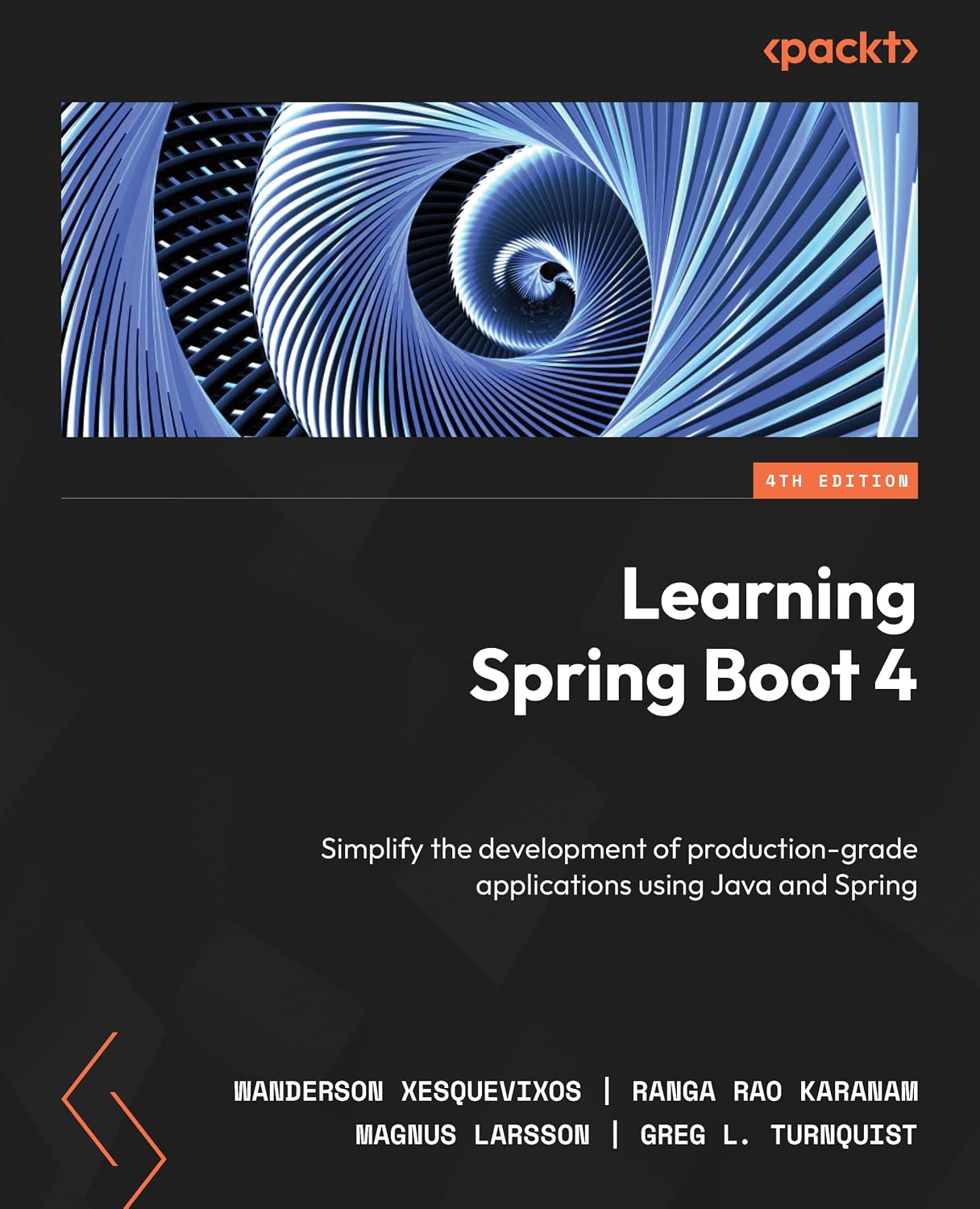
The new edition is based on Spring Boot 4.1 and covers new Spring Boot 4 features, like:
The book comes with four new chapters:
Virtual Threads in Java and Spring Boot
Building highly concurrent applications with a simpler, familiar imperative programming model compared to the non-blocking reactive model in Spring Boot 3
Messaging and Asynchronous Communication in Spring Boot 4
Building event-driven services with Spring Boot and Apache Kafka.
Observability with Spring Boot 4
Handling logs, metrics, and distributed traces using the OpenTelemetry standard. Exemplified by using Loki, Tempo, Grafana, and Prometheus.
Building Intelligent Applications with Spring AI
Building AI-powered applications, like chat clients, based on Spring AI 2.0 using Large Language Models (LLMs), Retrieval-Augmented Generation (RAG), and Model Context Protocol (MCP).
If you are new to Spring Boot, this book is for you. It teaches you the foundations of Spring Boot 4 in part 1 and then step by step adds more advanced concepts in later chapters:
If you are already familiar with Spring Boot and want to learn about news in Spring Boot 4, this book is also an excellent option. It has a final chapter listing all the new features, with references to the specific chapters in the book that cover each one.
My personal favorites are the chapters on observability and Spring AI: the observability chapter provides a ready-to-use observability stack based on Docker Compose, and the chapter on Spring AI gets you up and running with new exciting concepts of LLM, RAG, and MCP in no time!
Happy reading!