Blogg
Här finns tekniska artiklar, presentationer och nyheter om arkitektur och systemutveckling. Håll dig uppdaterad, följ oss på LinkedIn
Här finns tekniska artiklar, presentationer och nyheter om arkitektur och systemutveckling. Håll dig uppdaterad, följ oss på LinkedIn

The observability space offers a rich ecosystem of tools for monitoring applications and the infrastructure they are dependent on. Sometimes the sheer volume of signals combined with fragmented tooling can obscure what we want to achieve through observing. In this blog post we will look at the approach Sluicio uses, and how this can help us provide a better experience for end users.
Observability solutions tend to focus on “systems” - most suppliers will focus on how their tooling can provide insight, often through dashboards or AI tools, with the aim of meeting those well documented and defined SLAs. For example, OpenTelemetry define observability like this:
“Observability lets you understand a system from the outside by letting you ask questions about that system without knowing its inner workings.”
…where the “you”, the observer, is a technician with responsibility for the system being observed.
The question “why do we observe?” is just as important. We observe for the benefit of end users of the system, by providing a stable and satisfying service, or as Charity Majors (“Into the Unknown Unknowns Podcast”) says:
You want the perspective to be not from the system, but from the user and from every single user. And you want to know if every single user is having a good experience or not, which is a completely separate question from the question of is my service healthy or not.
So how do we know if our observing is actually making things better?
Consider SunnySide AB, a company that collects weather forecasts and bundles them into predictions for paying customers (introduced in my OpenTelemetry presentation at Cadec 2026).

SunnySide AB have released a new architecture to gather information from weather stations (weather-producers) that is then transferred via Kafka to a back end system (weather-consumers) for packaging and delivery. They are heavily reliant on OpenTelemetry for observability signals.
The telemetry streams (logs, metrics and traces) provide a huge amount of information to the observer. Now that observability is enabled, standardised dashboards start to pop up everywhere, exploding with colour and sprinkled with alerts to wake you in the middle of the night. This can quickly become overwhelming - in this example SunnySide AB have 17 running containers, where a single Kafka broker can be exposing thousands of metric points - what should we observe?
Conway’s law is in effect here and teams are expected to observe their own telemetry (marked with a team attribute). That’s great and now teams can feel confident that their own “silo” is delivering value. But there is a gap…
The customers of SunnySide AB love the rich data filled reports they receive, but creating this value requires coordination across systems and teams. In this example Team DreamMachine are responsible for delivering the final polished jewel to the customer. If something is incorrect they need to engage Team Kafka and Team Weathermen to identify where any problem occurs.
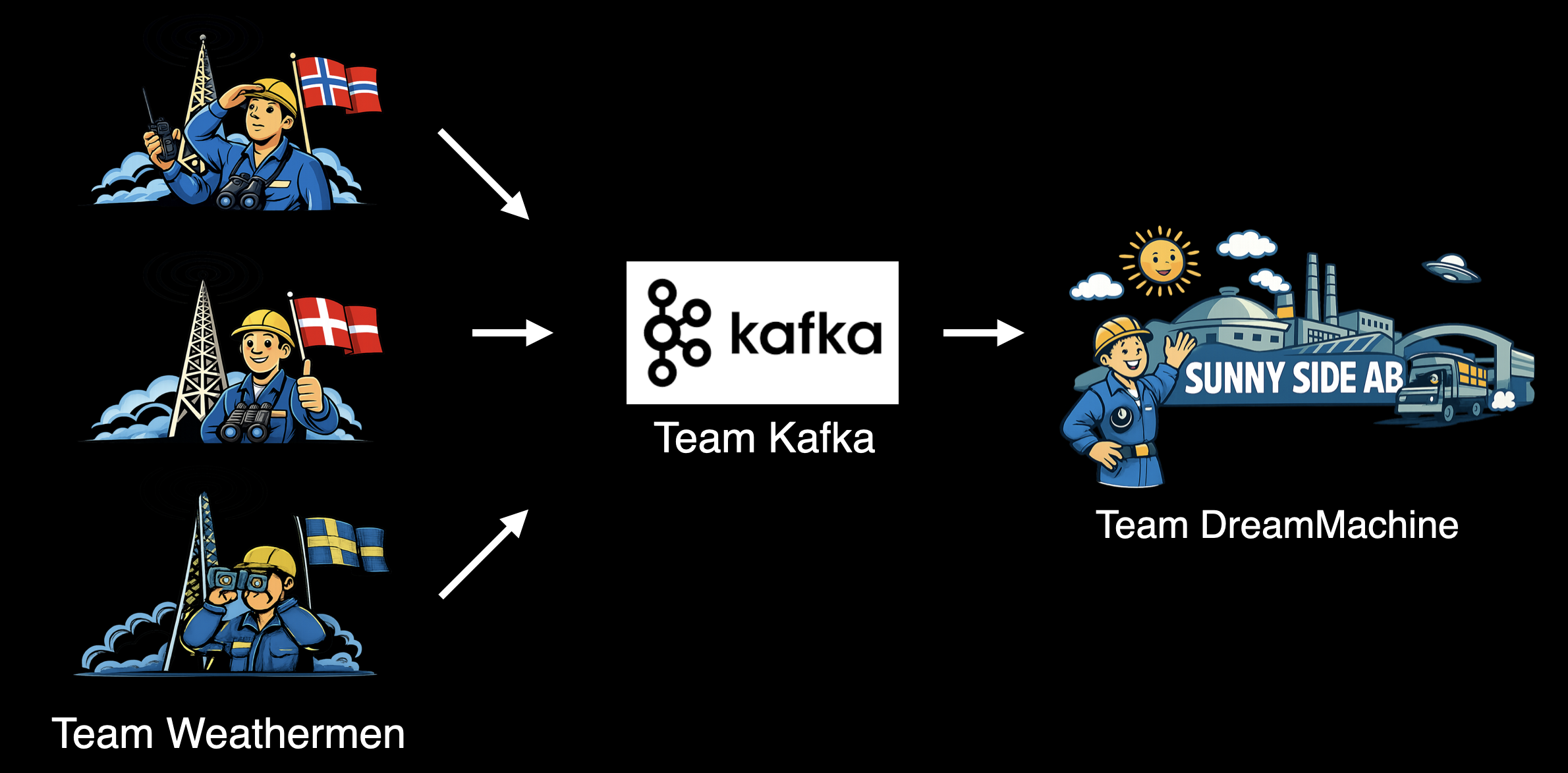
These teams may have different priorities, SLAs and even office hours. Coordinating a response is an organisational challenge, especially when telemetry is organised in silos and tooling is optimised for a specific type of signal (logs, metrics, etc).
Sluicio approach this challenge by introducing the concept of Integrations. Once we have registered our Consumers and Producers as Services and Kafka as a System it is possible to define the flow of data as an Integration.
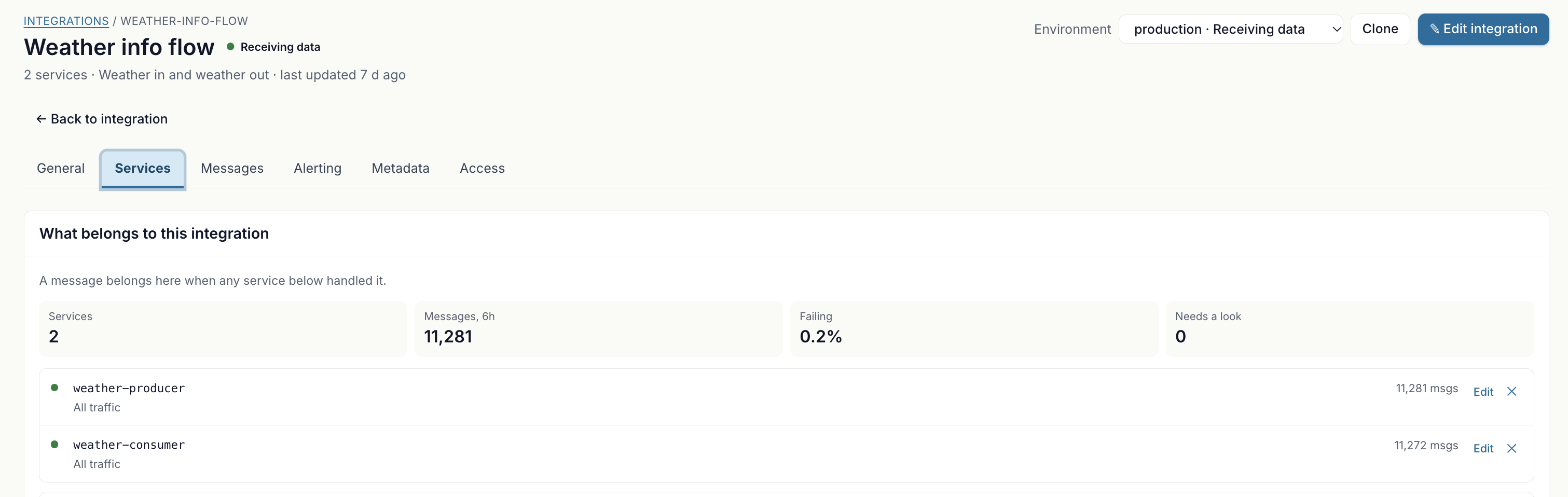
Immediately the flow of information can be observed as a coherent unit, rather than attempting to coordinate telemetry across a fractured set of Services:
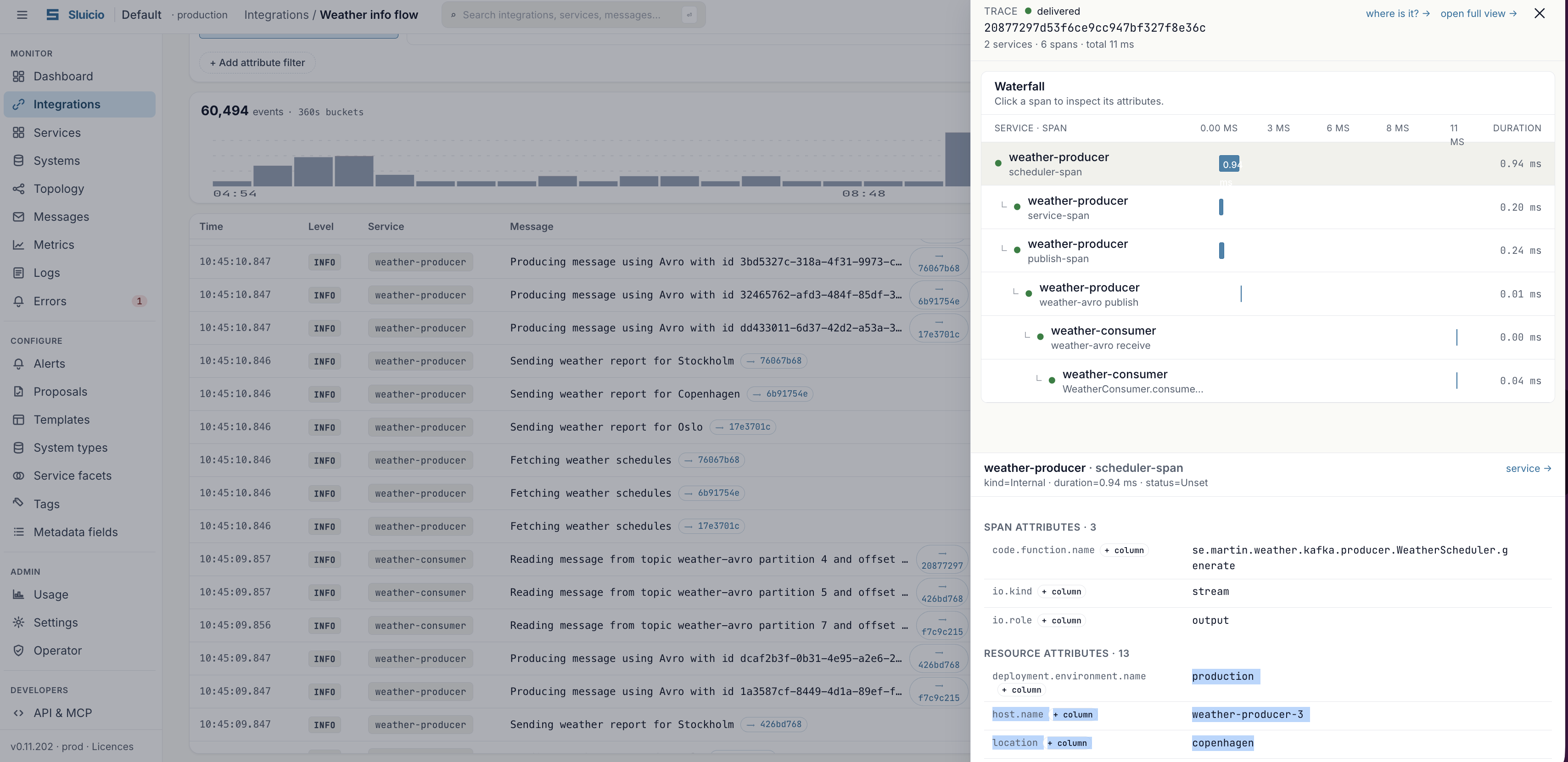
However the real power is in the alerting and the error handling - errors are visible at the Integration layer, they contain enough detail to identify the failing Service and to make a diagnosis, while targeting alerts to the people able to make a difference.
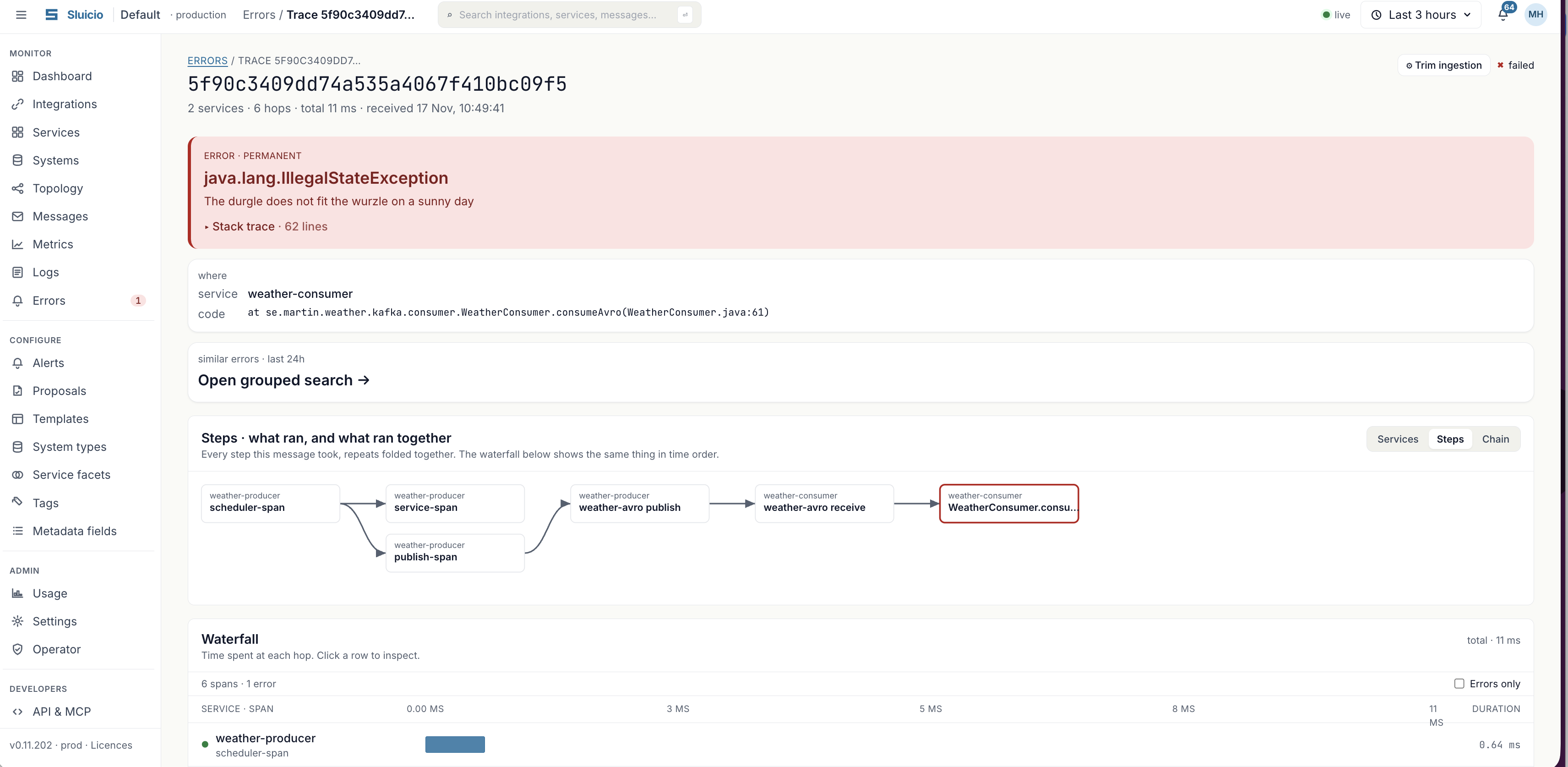
While Integrations do not, by themselves, solve the organisational challenges it makes that challenge immediately visible to the key stakeholders.
“Forewarned is forearmed”, once the motto of Britain’s Royal Observer Corps, is a fitting description of how observability empowers teams to build resilient, reliable systems. Yet organisational boundaries can quickly turn those 3:00 a.m. wake-up calls into multi-team guessing games.
Pivoting to an end user perspective ensures that your customers, not just your dashboards, actually benefit from all that telemetry. Achieving this requires tooling built around how data moves, and Sluicio Integrations is one way to make those end-to-end value chains visible.
Shining a light on the seams between teams does more than speed up incident response, it can even supply the evidence to apply an Inverse Conway Maneuver that reshapes your teams around the real value streams your end users depend on.